
Check out this year’s buzziest Halloween trends.
Google Search Blog
Ready or not, spooky season is here. To help you prepare, we’re launching Google Frightgeist, our annual interactive website highlighting the top trending searches for H…
— The Editorial Index
The SEO Cover
A curated hub of SEO articles, videos, tools, and people — organized by topic.
Topic
1319 resources
AI Search refers to the fundamental shift in how people find answers—moving away from traditional keyword-based queries toward conversational, reasoning-driven systems that understand intent, context, and complexity. For SEO practitioners, this means your content and information architecture now compete in an environment where AI systems synthesize, summarize, and sometimes replace the search result itself. The stakes are different: visibility isn't just about ranking; it's about whether your expertise gets surfaced, attributed, or bypassed entirely by a system that's learned to be a thinking partner rather than a directory.
The field is in active reorganization. Enterprise adoption is accelerating—large organizations are embedding AI deeply into workflows, moving past one-off chatbot experiments toward persistent, multi-step agents that make decisions and execute tasks. This changes what "search" even means: it's no longer a moment of query-and-click, but an ongoing dialogue where the system remembers context, chains reasoning across multiple steps, and increasingly handles end-to-end tasks without leaving the interface. At the same time, trust and safety are becoming competitive advantages. Transparency about AI-generated content, source attribution, and provenance are emerging as table stakes—not just for compliance, but because users and enterprises both care whether the system can be relied on. The real tension isn't AI versus traditional search; it's between systems that close loops (finding an answer, executing a task) and publishers who've built their entire model on the assumption they'd always be the destination.
Focus on understanding how your content fits into agent workflows, not just search ranking. Attribution and authority matter more than keywords now.
Google Search Blog
Ready or not, spooky season is here. To help you prepare, we’re launching Google Frightgeist, our annual interactive website highlighting the top trending searches for H…

Google Search Blog
Whether you need a last-minute costume or a scary movie watchlist, let Google handle heavy lifting for your Halloween prep.
OpenAI
Using GPT-6 Astra in Codex, Asana made its browser agent 76x cheaper and 5x faster in tests to offer customers more capable models.
OpenAI
Discover how Sophos uses OpenAI’s Daybreak to cut cyber-threat investigation time by 96% and automate 52% of MDR cases while preserving human oversight.
OpenAI
Across recruiting, engineering, and operations, Oracle turns specialist knowledge into fast, repeatable workflows with ChatGPT Work and Codex.
OpenAI
LegalOn cut estimated daily Codex costs by 65% while maintaining development speed. It matched Astra, Sol, and Luna to tasks and managed budgets strategically.
OpenAI
OpenAI disrupted two AI-enabled influence operations that used false-front journalists and a think tank to spread geopolitical messaging.

iPullRank
Nearly every marketer has probably lived through a similar situation in which traffic drops, but there are multiple plausible reasons why. It could be a crawling issue, broken tracking, or other possible options, but you’re just not sure which. So, you start digging for a piece o
OpenAI
With GPT-5.6, GPT-6 Astra, and GPT‑Image‑2.5, Pollo AI helps creators turn bold ideas into detailed images and cinematic video ads.

Marketing AI Institute
You’re coming to Cleveland for MAICON 2026. Excellent choice.Now let’s make sure you get the most out of it.
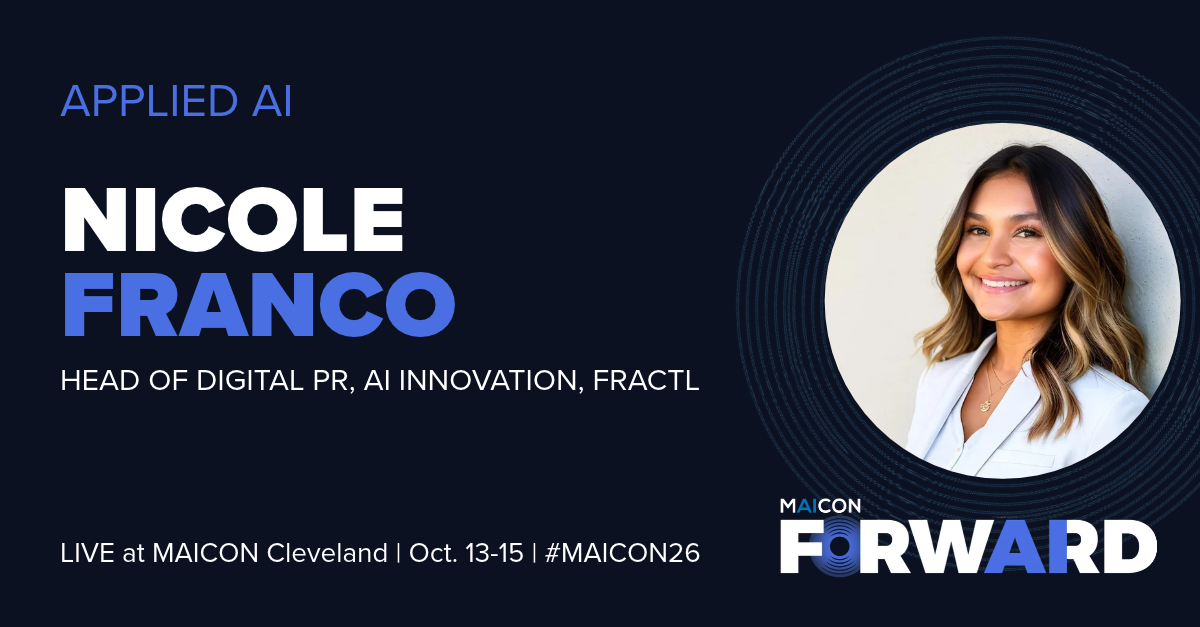
Marketing AI Institute
Traditional public relations taught marketers to pitch stories and build relationships with journalists. That work still matters, but it no longer decides whether a brand shows up when a buyer asks ChatGPT, Gemini, or Google's AI Overviews for a recommendation.

Google Search Blog
Explore this year’s trends and tips for holiday travel — from insights on booking the lowest fare to trending destinations for Thanksgiving and Christmas.
OpenAI
Chatham Financial uses Codex and GPT-5.6 to build technology and redesign workflows, cutting trade validation from 30 minutes to under 4.
OpenAI
Learn how startups can choose GPT-6 models, tune reasoning effort, improve prompts and skills, coordinate tools, and prepare workflows for production.
iPullRank
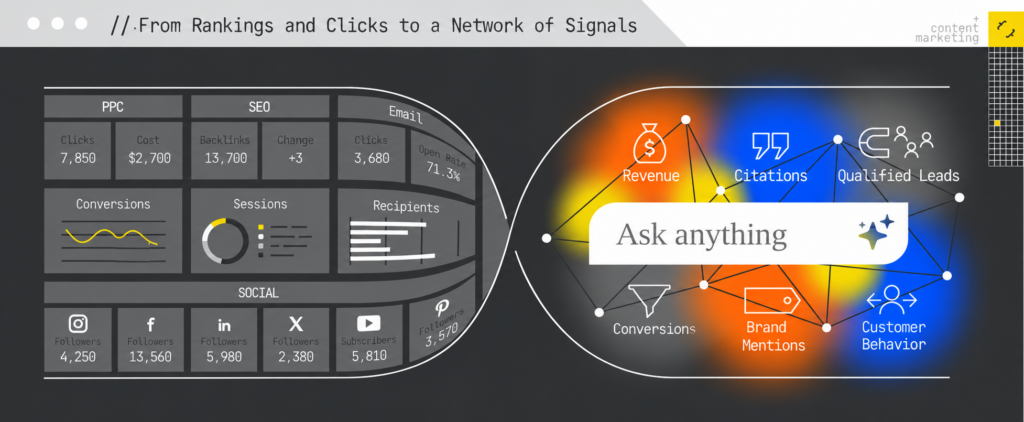
KPIs are at the top of all of our clients’ minds these days. That’s what we’re hearing about on every call as we discuss their business goals. What do we measure now in this new age of AI Search and what are these measurements showing us? You’ve probably also been struggling with
OpenAI
As it opens a new location, the social club prepares grant applications in 2 hours instead of 3 days and liquor-license materials in 3 hours instead of 4 days.
OpenAI
Albertsons Cos. is using ChatGPT Enterprise and the OpenAI API to help teams work faster and make grocery shopping easier for millions of customers.

Google Search Blog
Learn how Google Search can help you improve your morning cup of coffee.
OpenAI
Advanced AI may matter most for the routine work behind breakthrough ideas. Explore why execution could shape the next economy and the pace of progress.
Google Search Blog
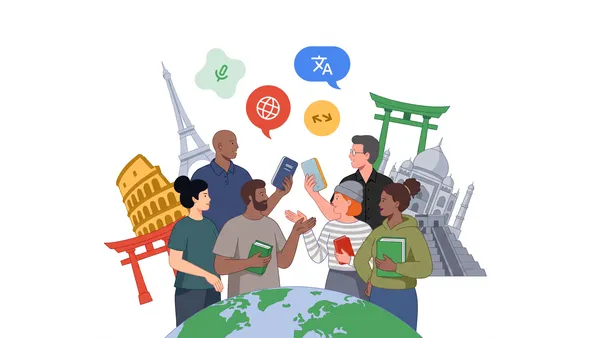
On International Translation Day, learn how members of our team bring cultural nuance to Translate to connect people globally.
Marketing AI Institute
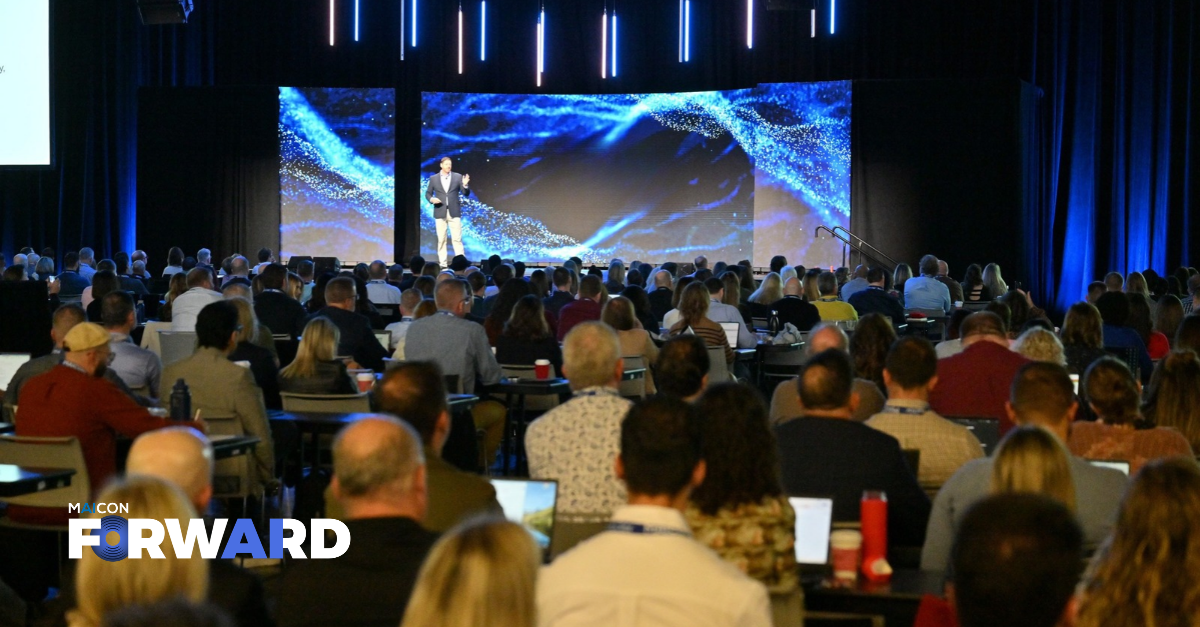
The AI conversation is coming to Cleveland. And this year, you can listen to it in real time.
Marketing AI Institute
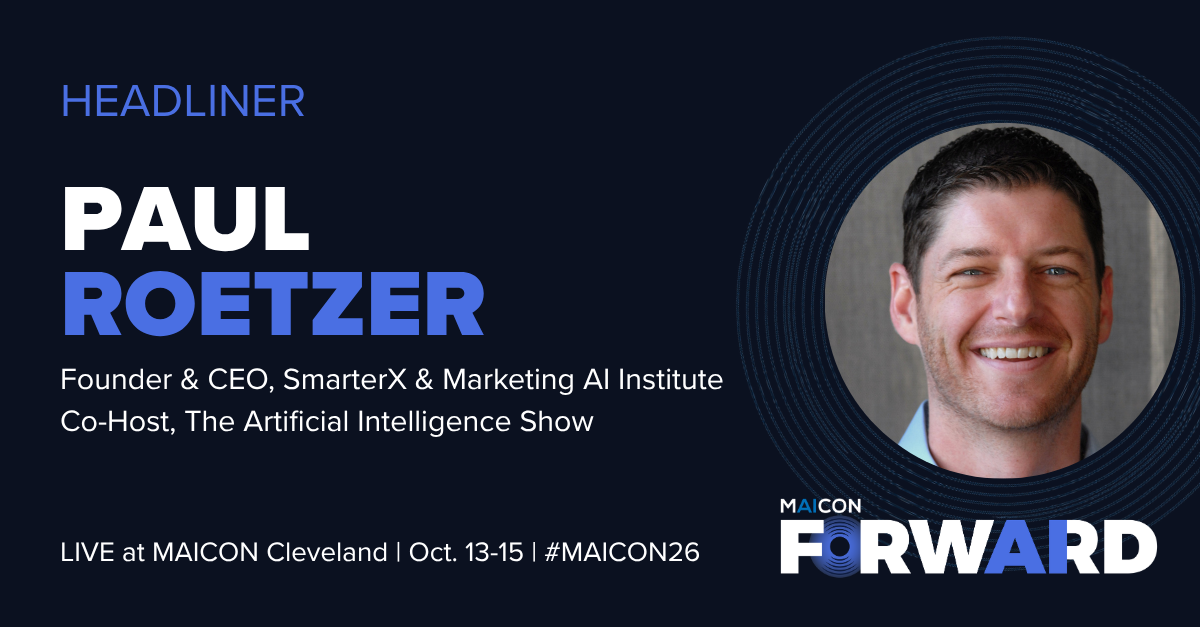
Paul Roetzer, Founder and CEO of SmarterX and Marketing AI Institute, will kick off MAICON 2026 with a keynote titled "The Architect, The Orchestrator and The Apprentice: Rethinking Work in the Age of AI and Agents."
Marketing AI Institute
AI enables marketers to publish a lot of content quickly. But keeping up with fact-checking and copy editing can be a challenge. And mistakes erode credibility.
Marketing AI Institute
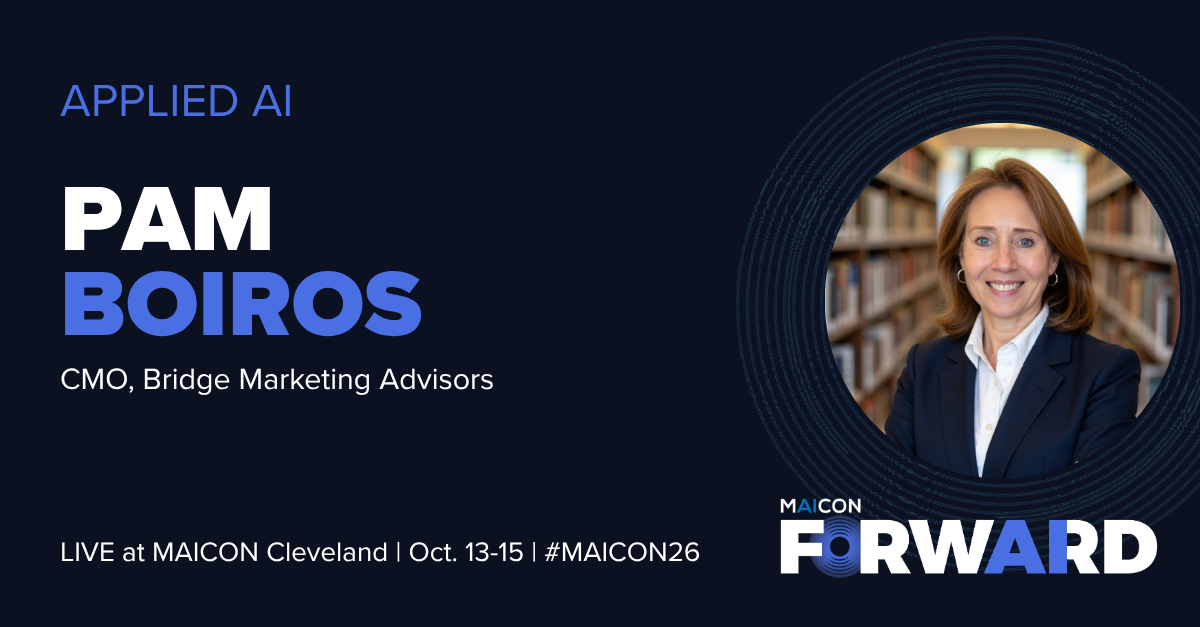
Most marketing teams have rolled out AI tools. Far fewer have changed how they work with them in their jobs.
Google's AI-generated summaries displayed at the top of search results, pulling information from multiple sources to answer queries directly. Full definition →
Optimizing content and websites to rank well in AI-powered answer engines like ChatGPT, Claude, and Perplexity rather than traditional search engines. Full definition →
SEO strategy focused on establishing and strengthening a brand or topic as a recognizable entity in search systems and knowledge graphs. Full definition →
A highlighted search result that displays an answer to a query directly on the SERP, pulled from a webpage's content. Full definition →
Practice of optimizing content and technical setup to perform well in AI-powered search engines and generative answer systems. Full definition →
Google's semantic database linking entities, attributes, and relationships to understand real-world objects and concepts beyond keywords. Full definition →